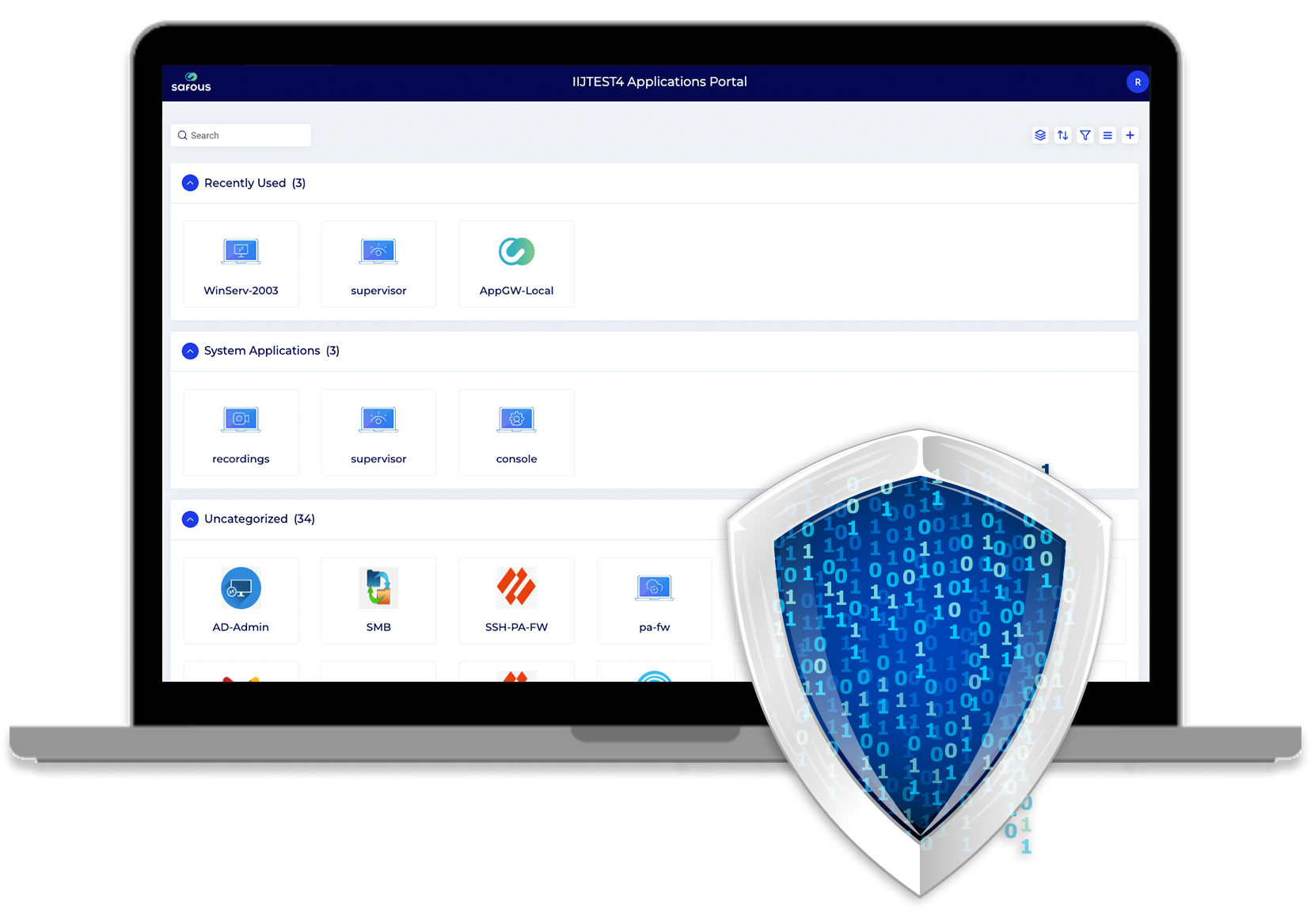
The Complete Guide To
Privileged Remote Access
Secure remote access for administrators, vendors, and OT environments without the complexity of VPNs.
- What Is Privileged Remote Access?
- What Is Remote Privileged Access Management (RPAM)?
- Security Risks Of Uncontrolled Privileged Access
- Common Use Cases Of Privileged Remote Access
- Privileged Remote Access vs Other Access Solutions
- Vendor Remote Access Security
- Privileged Remote Access For OT And ICS Environments
- How Privileged Remote Access Works
- Benefits Of Privileged Remote Access
- Frequently Asked Questions (FAQ)
- Privileged Remote Access with Safous
Modern organizations rely on remote access to manage critical systems, maintain infrastructure, and support operations. Administrators, external vendors, contractors, and OT engineers frequently connect to corporate environments from outside the network to perform maintenance, troubleshooting, and system management.
Because these users often require elevated privileges, securing remote privileged access has become a critical cybersecurity challenge for modern organizations.
However, traditional remote access methods, such as VPNs, often expose large portions of the network and offer limited visibility into privileged activities. When attackers compromise remote access credentials, they can gain direct entry to critical systems.
Privileged Remote Access is designed to address this challenge. It enables organizations to securely connect administrators and third-party vendors to specific systems while enforcing identity verification, least-privilege access, and full session visibility.
Privileged Remote Access is a security approach that allows administrators and third-party vendors to securely access critical systems from remote locations while enforcing identity verification, least-privilege access policies, and session monitoring. It is commonly used to secure remote administrative access to servers, applications, and industrial systems.
Key Takeaways
What Is Remote Privileged Access Management (RPAM)?
Remote Privileged Access Management (RPAM) is a category within Privileged Access Management (PAM) that focuses on securing remote privileged sessions. It enables organizations to control, monitor, and audit how administrators, contractors, and third-party vendors access critical systems from outside the corporate network.
While traditional PAM solutions primarily manage privileged credentials and identity governance, RPAM specifically addresses the risks associated with remote administrative access. These risks often arise when administrators or external vendors connect remotely to servers, databases, network devices, or industrial systems.
RPAM solutions typically provide capabilities such as identity-based authentication, session monitoring, just-in-time access, and detailed audit logging. By controlling privileged remote sessions, organizations can reduce the risk of unauthorized access, supply chain attacks, and lateral movement within the network.
Core Capabilities of Remote Privileged Access Management
Secure remote access for administrators and external vendors
Identity-based authentication and least-privilege access
Monitoring and recording of privileged sessions
Detailed audit trails for compliance and investigation
Security Risks of Uncontrolled Privileged Access
Unsecured privileged remote access can expose organizations to significant cybersecurity risks.
When administrators, vendors, or contractors connect remotely to critical systems without strong access controls and session visibility, attackers may gain pathways into sensitive environments.
Excessive Network Exposure
Traditional remote access technologies often expose broader internal networks instead of restricting users to specific systems and sessions.
Unmonitored Administrative Sessions
Without session monitoring and audit logging, organizations may have limited visibility into privileged remote activity.
Third-Party Vendor Risks
Vendors and contractors frequently require remote privileged access, creating security risks if access is not tightly controlled.
Lateral Movement After Compromise
Broad network-level remote access can allow attackers to move across internal systems after a single compromised account or session.
Common Use Cases of Privileged Remote Access
Privileged Remote Access is commonly used to secure high-risk remote connections to critical systems. Organizations rely on it to control how administrators, contractors, and vendors access sensitive infrastructure.
Remote Administrator Access
IT administrators often need remote access to servers, databases, and infrastructure systems. Privileged Remote Access allows organizations to secure these sessions through identity-based access controls and session monitoring.Third-Party Vendor Access
External vendors frequently require access to enterprise environments to perform maintenance, upgrades, or troubleshooting. Privileged Remote Access ensures that vendor access is restricted to specific systems while maintaining full visibility and auditability.Contractor and Partner Access
Temporary workers, consultants, and integration partners often need privileged access for limited periods. Privileged Remote Access enables organizations to enforce least-privilege access and revoke permissions once work is completed.
OT and Industrial System Access
Operational technology (OT) environments rely on remote engineers and equipment vendors to maintain industrial control systems. Privileged Remote Access provides secure connectivity while protecting sensitive ICS infrastructure from unauthorized access.
Privileged Remote Access vs Other Access Solutions
Modern organizations rely on remote administrators, third-party vendors, and OT engineers to maintain critical systems.
These high-privilege remote connections introduce unique security risks that traditional access solutions were not designed to address. Privileged Remote Access provides a purpose-built approach to securing these connections.
Virtual Private Networks (VPNs) provide network-level connectivity, allowing users to connect to an internal network remotely. While VPNs were once the standard solution for remote access, they grant broad network access once a connection is established, which can expose organizations to lateral movement, malware propagation, and credential abuse.
Privileged Remote Access takes a fundamentally different approach. Instead of granting access to an entire network, it restricts users to specific systems or sessions based on identity, role, and policy.
With Privileged Remote Access:
- Access is limited to specific systems rather than the entire network
- Identity verification and least-privilege policies are enforced before access is granted
- Administrative sessions can be monitored and recorded
- Attack surfaces are reduced by preventing unnecessary network exposure
Because of these controls, Privileged Remote Access is better suited for securing administrative and vendor access to critical infrastructure, while VPNs remain primarily a connectivity solution.
Zero Trust Network Access (ZTNA) solutions are designed to secure workforce access to business applications. They follow the principle of “never trust, always verify,” ensuring that employees and devices must authenticate before accessing corporate applications.
While ZTNA improves security for general workforce connectivity, it is not specifically designed to manage privileged administrative sessions.
Privileged Remote Access focuses on a different problem: protecting high-risk access to critical systems by administrators, contractors, and third-party vendors.
Key differences include:
- ZTNA primarily secures employee access to applications
- Privileged Remote Access protects administrative access to sensitive systems
- Privileged Remote Access provides session monitoring, recording, and command visibility
- Vendor and contractor access can be tightly controlled and audited
In many environments, organizations deploy ZTNA for workforce access and Privileged Remote Access to secure privileged administrative connections.
Security Service Edge (SSE) is a cloud-delivered security framework that integrates technologies such as secure web gateways, cloud access security brokers, and ZTNA. SSE solutions are designed to protect users accessing cloud applications and internet services from distributed environments.
However, SSE platforms primarily focus on securing web traffic and user access to SaaS applications rather than managing privileged administrative connections.
Privileged Remote Access addresses a different security challenge: securing remote access to critical systems that require administrative privileges.
Unlike SSE platforms, Privileged Remote Access provides:
- Fine-grained control over privileged sessions
- Identity-based access enforcement for administrators and vendors
- Session monitoring and full audit trails
- Secure access to servers, infrastructure, and industrial systems
As a result, SSE solutions protect general user access to cloud services, while Privileged Remote Access secures high-risk administrative connections to sensitive systems.
Secure Access Service Edge (SASE) is a cloud-delivered architecture introduced by Gartner that combines networking technologies such as SD-WAN with security services commonly referred to as Security Service Edge (SSE). SASE platforms are designed to provide secure connectivity for distributed users, branch offices, and cloud applications.
While SASE focuses on securing network connectivity and internet traffic across distributed environments, Privileged Remote Access addresses a different security challenge: protecting high-privilege remote connections used by administrators, contractors, and third-party vendors when accessing critical systems.
Key differences include:
- SASE secures network connectivity for distributed users and branch offices
- Privileged Remote Access secures privileged administrative sessions to critical systems
- SASE focuses on traffic inspection and network security services
- Privileged Remote Access focuses on identity-based access control and session monitoring
- Privileged Remote Access enables full visibility and auditing of administrative activity
Because of these differences, organizations often deploy SASE to secure workforce connectivity while using Privileged Remote Access to protect high-risk administrative and vendor access to sensitive infrastructure.
Privileged Access Management (PAM) platforms are designed to control and govern privileged identities within an organization. Traditional PAM solutions focus on credential vaulting, password rotation, and governance policies for privileged accounts.
While PAM systems help manage privileged identities, remote access capabilities are often implemented as additional modules or integrations.
Privileged Remote Access focuses specifically on securing remote privileged sessions, enabling administrators, vendors, and contractors to access critical systems safely from external locations.
Compared to traditional PAM platforms, Privileged Remote Access provides:
- Secure remote connectivity to critical systems
- Identity-based access enforcement for privileged users
- Monitoring and recording of administrative sessions
- Simplified deployment for securing vendor and remote administrator access
In many organizations, Privileged Remote Access complements PAM platforms by securing how privileged users connect to systems, while PAM governs how privileged credentials are managed.
Why Jump Servers Are Not Enough
Historically, many organizations used jump servers (also known as bastion hosts) to manage administrative access to critical systems. In this model, administrators first connect to a hardened intermediate server before accessing internal infrastructure.
While jump servers provide a basic layer of access control, they lack many capabilities required for modern privileged access security. Once authenticated to the jump server, users may still gain broad access to internal systems, and visibility into individual administrative sessions is often limited.
Privileged Remote Access improves on this model by enforcing identity-based access controls, restricting connections to specific systems, and providing full session monitoring and auditing.
Vendor Remote Access Security
Why Vendor Remote Access Is Risky
which can expose enterprise networks if access is not tightly controlled.
Common Vendor Remote Access Scenarios
Troubleshooting and upgrading enterprise platforms.
Software vendors may require temporary remote access to application servers, databases, or enterprise systems to resolve issues, deploy patches, or support upgrades.
Remote administration of infrastructure and applications.
MSPs frequently manage cloud platforms, networks, and enterprise infrastructure on behalf of organizations, requiring secure privileged access to perform ongoing operational support.
Deployment and configuration of enterprise systems.
System integrators often require privileged remote access during implementation projects to configure enterprise applications, infrastructure components, and integrated platforms.
Maintenance and diagnostics for industrial systems. These vendors often require privileged access to specialized equipment such as industrial controllers, production systems, or monitoring platforms to perform troubleshooting and maintenance.
How Privileged Remote Access Secures Vendor Connections
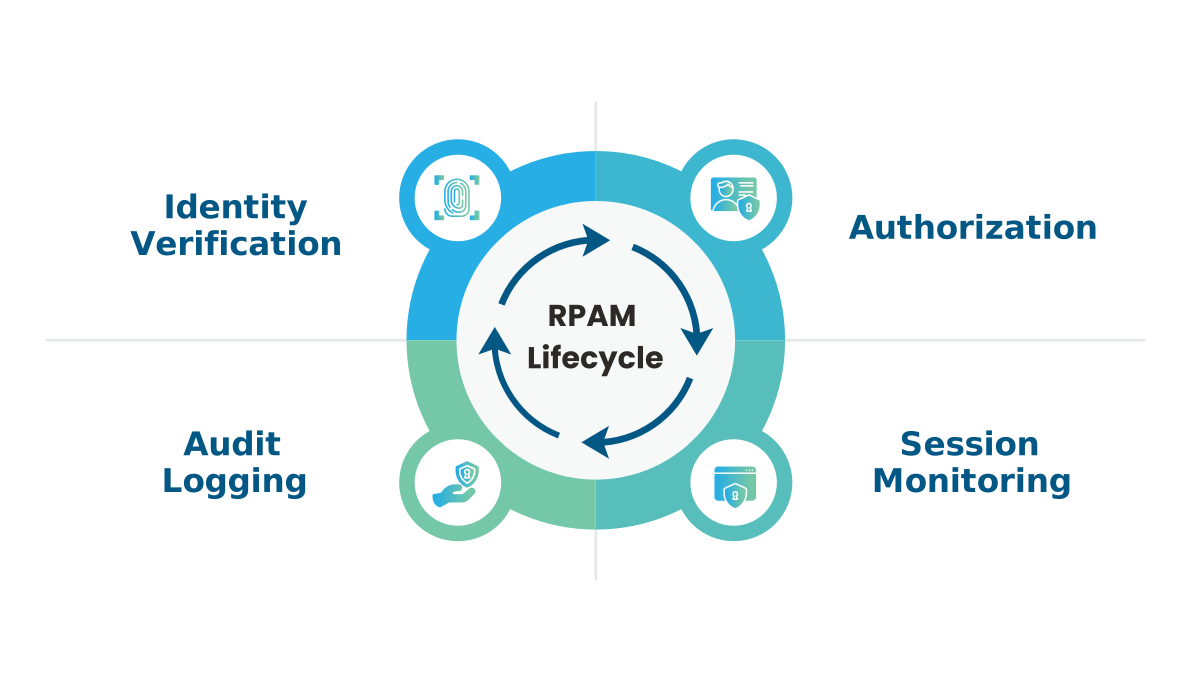
Identity Verification
Access granted only after strong authentication.
System-Level Access
Vendors connect only to authorized systems.
Session Monitoring
Administrative activity is monitored and recorded.
Audit Logging
All sessions are logged for compliance and investigation.
Privileged Remote Access for OT and ICS Environments
Why OT Environments Require Secure Remote Access
Operational Technology (OT) environments frequently require remote access for maintenance, diagnostics, and operational support. Engineers, equipment vendors, and service providers often need to connect remotely to industrial systems to troubleshoot issues, update equipment, or perform maintenance.
Unlike traditional IT environments, OT systems often include industrial control systems (ICS), PLCs, SCADA systems, manufacturing equipment, and critical infrastructure where downtime or unauthorized access can directly impact physical operations. As organizations increasingly rely on third-party vendors and remote engineers, securing privileged remote access has become a critical requirement for protecting industrial environments.

Security Risks of Remote Access in OT Networks
Unauthorized System Access
Remote connections may expose industrial systems if authentication and access controls are not properly enforced.
Lateral Movement in OT Networks
Flat industrial networks can allow attackers to move between control systems once access is gained.
Vendor Credential Abuse
Compromised vendor accounts can provide attackers with privileged access to industrial environments.

How Privileged Remote Access Secures OT Systems
Access is granted only after identity verification for engineers and vendors.
Remote users connect only to specific industrial systems required for their tasks.
Administrative sessions are monitored and recorded to ensure full visibility.
Industrial networks remain protected because full network connectivity is never exposed.

Secure Vendor Remote Access for Industrial Systems
Industrial environments frequently rely on equipment vendors and maintenance providers for ongoing system support. These external engineers often require remote access to programmable logic controllers (PLCs), supervisory control systems, or industrial servers to perform diagnostics and maintenance.
Privileged Remote Access allows organizations to provide vendor access without exposing entire OT networks. Through controlled access sessions, vendors connect only to authorized systems while all activity is monitored and logged, helping protect critical infrastructure from unauthorized or risky remote connections.
How Privileged Remote Access Works
Privileged Remote Access secures administrative and vendor sessions through identity verification, system-level access controls, and continuous monitoring.
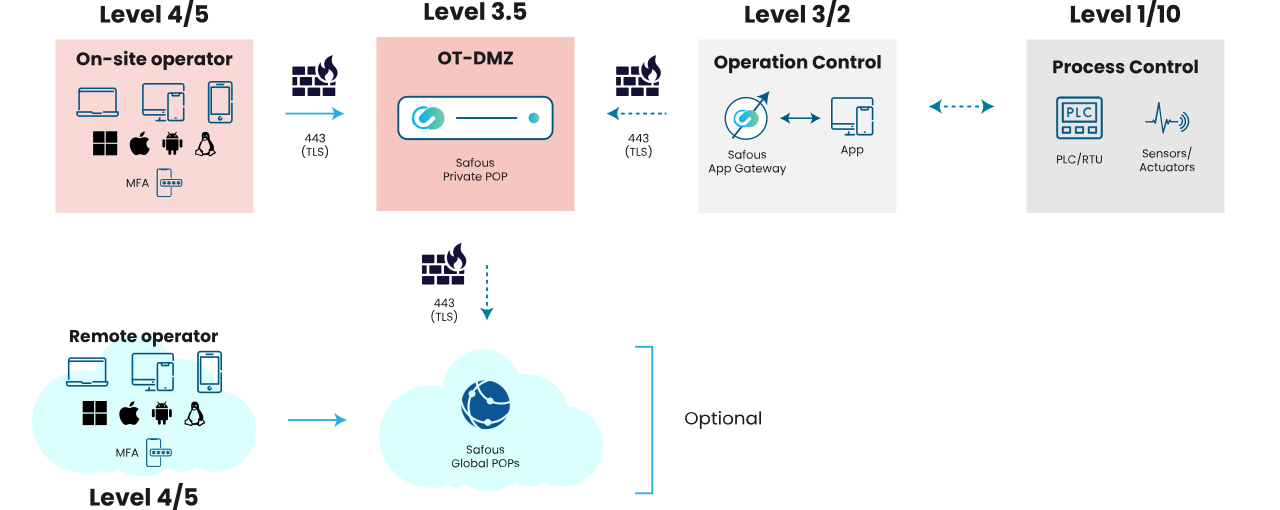
Users authenticate with MFA and identity-based policies before access is granted.
Users connect only to authorized systems instead of the entire network.
Sessions are securely brokered without exposing internal networks or requiring direct inbound connectivity.
Administrative activity is monitored and recorded for compliance and investigations.
Zero Trust Remote PAM Architecture
Benefits of Privileged Remote Access
Privileged Remote Access helps organizations secure high-risk remote connections to critical systems without exposing entire networks.
By enforcing identity verification, system-level access controls, and session visibility, organizations can reduce security risks while maintaining operational efficiency.
Frequently Asked Questions (FAQ)
Frequently Asked Questions About Privileged Remote Access
Privileged Remote Access is a security approach that allows administrators, vendors, and contractors to securely connect to critical systems from remote locations. It restricts access to specific systems and sessions while enforcing identity verification, least-privilege policies, and session monitoring.
Remote access generally refers to connecting to systems or networks from outside the organization. Privileged Remote Access specifically secures high-privilege administrative sessions by restricting access to specific systems and monitoring activity to reduce security risks.
Remote Privileged Access Management (RPAM) is a term used by analysts such as Gartner to describe technologies that secure remote privileged sessions. RPAM solutions control how administrators and third-party users connect to sensitive systems while providing authentication, session monitoring, and audit logging.
Zero Trust Remote PAM applies zero trust principles to privileged remote access. Users must authenticate before every session, access is limited to specific systems, and all administrative activity is monitored to reduce the risk of unauthorized access.
No. Privileged Access Management (PAM) focuses on managing privileged identities and credentials, such as password vaulting and credential rotation. Privileged Remote Access focuses on securing the remote sessions used by administrators and vendors when accessing critical systems.
Privileged Remote Access secures the way administrators and vendors connect to critical systems. While some organizations use PAM to manage privileged credentials, many adopt Privileged Remote Access as a simpler approach for controlling and monitoring remote privileged sessions.
Vendor remote access introduces risk because external users often require privileged access to internal systems. If vendor credentials are compromised or access is not tightly controlled, attackers may gain entry into enterprise environments through trusted third-party connections.
Privileged Remote Access improves security by enforcing identity verification, restricting access to specific systems, and monitoring administrative sessions. These controls help reduce attack surfaces and provide full visibility into privileged activity.
OT environments often require remote connectivity for maintenance, diagnostics, and operational support. Privileged Remote Access allows engineers and equipment vendors to securely connect to industrial systems while ensuring that access is restricted, monitored, and auditable.
Privileged Remote Access can securely connect users to critical systems, including servers, network devices, enterprise applications, cloud infrastructure, and industrial control systems. Access is restricted to specific systems and sessions to reduce security risk.
Yes. Privileged Remote Access is commonly implemented as part of a Zero Trust security strategy because it restricts access based on identity, least-privilege principles, and continuous session visibility.
Privileged Remote Access With Safous
Safous helps organizations secure privileged remote access for administrators, third-party vendors, and OT environments without exposing internal networks.
Built on Zero Trust principles, Safous enables organizations to restrict access to specific systems, monitor privileged sessions, and improve visibility into high-risk remote activity.
Whether securing vendor connectivity, remote IT administration, or industrial system access, Safous helps organizations modernize privileged access while reducing operational complexity.
Explore Safous Privileged Remote Access Solutions
- Privileged Remote Access
- Industrial Secure Remote Access
- Vendor Access Security
- Zero Trust Remote PAM
Learn More

Want to keep up with the latest in cybersecurity news, trends, and thought leadership?
Sources
- https://www.ibm.com/security/data-breach
- https://info.lookout.com/rs/051-ESQ-475/images/idg-report-buying-into-mobile-security.pdf
- https://assets.sophos.com/X24WTUEQ/at/4wxp262kpf84t3bxf32wrctm/sophos-state-of-ransomware-healthcare-2022-wp.pdf
- https://services.google.com/fh/files/blogs/google_security_infographic.pdf
- https://www.zdnet.com/article/average-organization-targeted-by-over-700-social-engineering-attacks-each-year-report/
- https://www.microsoft.com/security/blog/2021/07/28/zero-trust-adoption-report-how-does-your-organization-compare/
- https://www.forbes.com/sites/forbestechcouncil/2021/10/01/why-sase-and-ztna-are-even-better-together-when-tightly-integrated/?sh=71604c387e97