Organizations around the globe are adopting cloud services, hybrid work, and outsourced IT and maintenance. These changes improve efficiency, but they also multiply the number of users, devices, and third parties that need access to critical systems – and every unnecessary permission becomes an opportunity for attackers.
That’s why the principle of least privilege has become a foundation of modern security programs, from zero trust network access (ZTNA) to privileged access management (PAM). In this blog, we explain what least privilege access is, why it matters, and how it fits with ZTNA and PAM.
What Is Least Privilege Access?
Least privilege access is a security principle that gives every user, application, or process only the minimum access needed to perform a specific task – and nothing more. Instead of broad, standing permissions, users receive access to specific resources, for a specific purpose, often for a limited time.
Implementing least privilege typically includes:
- Privilege audits to identify excessive or unused permissions.
- Separation of duties so no single account controls an entire critical process.
- Just-in-time (JIT) access that grants elevated privileges only when needed and revokes them automatically afterward.
- Role- and attribute-based policies that tie access to identity and context rather than network location.
Benefits of Least Privilege Access
Least privilege reduces the attack surface and limits the blast radius of a breach. If an account is compromised, attackers can only reach the limited set of resources that account was allowed to use, making lateral movement far more difficult.
It also supports business continuity and compliance. Narrow, well-documented permissions make it easier to isolate affected systems during an incident and to show auditors exactly who can access what.
Least Privilege, ZTNA, and PAM: How They Fit Together
Least privilege is a principle; ZTNA and PAM are two ways to enforce it.
- ZTNA works on the principle of “never trust, always verify.” It authenticates every user and device on each access request and connects them only to the specific applications they are authorized to use, rather than to the whole network.
- PAM focuses on the highest-risk accounts – administrators, service accounts, and vendors with elevated rights – adding controls such as credential protection, approval workflows, and session monitoring.
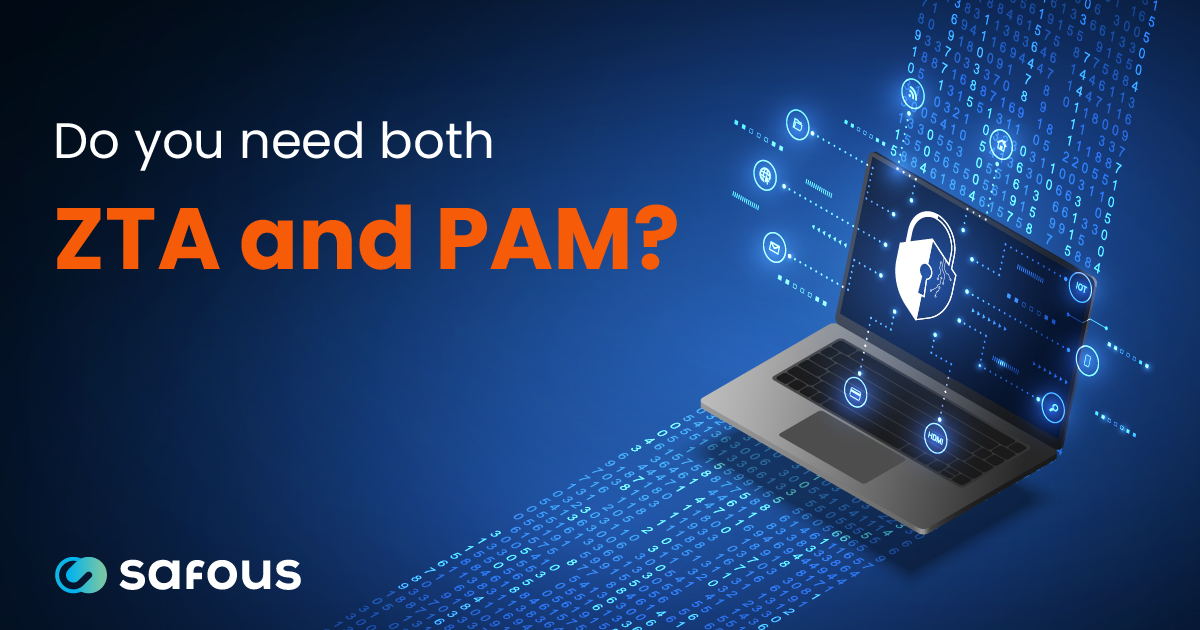
Used together, they apply least privilege at both levels: who can reach a system, and what a privileged user can do once there. For a deeper comparison, read ZTNA vs. PAM: Do You Need Both?
Frequently Asked Questions
Is least privilege the same as zero trust?
No. Zero trust is a broader security model that removes implicit trust based on network location. Least privilege is one of its core principles, defining how much access a verified user should receive.
What is just-in-time access?
Just-in-time access grants elevated privileges only for the duration of a specific task and revokes them automatically afterward, eliminating standing privileges that attackers could exploit.
How does least privilege apply to third-party vendors?
Vendors and contractors should receive access only to the specific systems they support, only when they need it, with their sessions monitored and recorded. This avoids shared credentials and broad VPN access.
Enforce Least Privilege With Safous
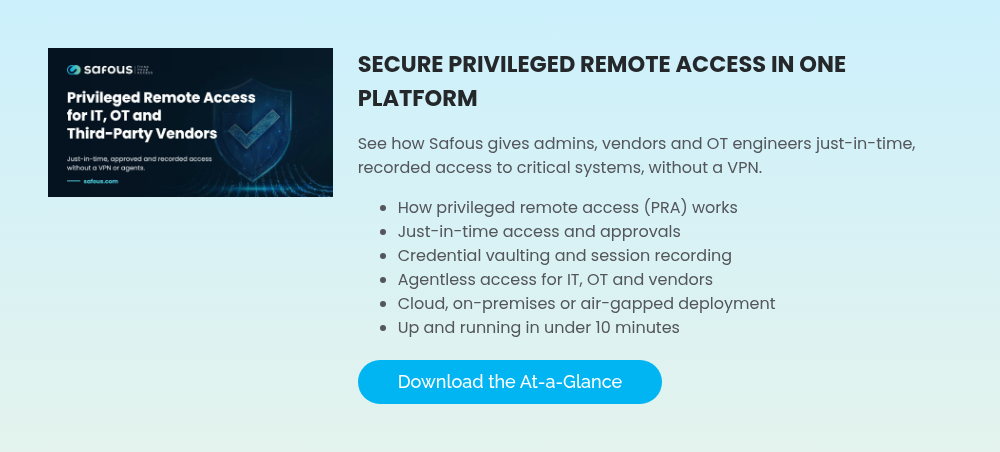
Safous Privileged Remote Access puts least privilege into practice for employees, administrators, and third-party vendors. It provides identity-based access to specific systems, just-in-time access for vendors and contractors, privileged session monitoring and recording, and detailed audit trails – all through agentless, browser-based access with no VPN required.
Want to learn more? Read our Privileged Remote Access Guide, or get started with Safous today.